When Infrastructure Becomes Influence Who Controls Data in the Cloud
When Infrastructure Becomes Influence Who Controls Data in the Cloud
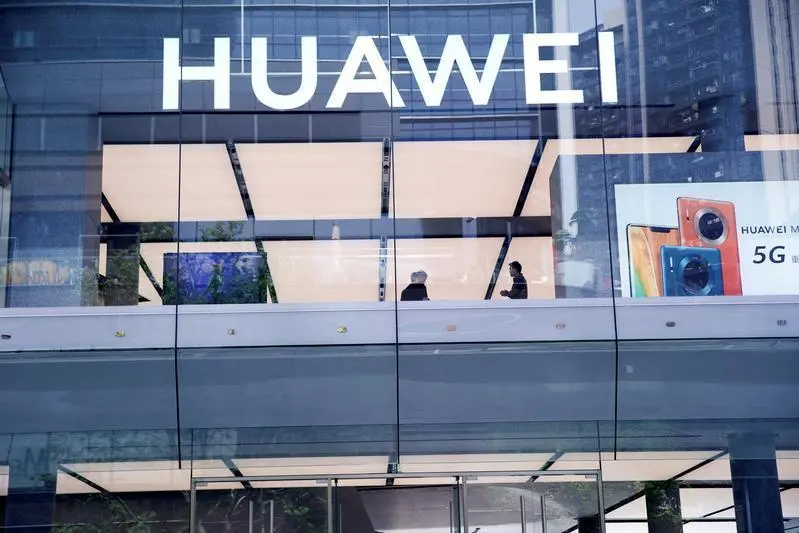
In September 2023, Chinese tech giant Huawei opened a major cloud data center in Riyadh, Saudi Arabia, and its first in the Middle East and North Africa. At first glance, this move appears to be a straightforward step in Huawei’s global expansion and Saudi Arabia’s digital modernization. But behind the sleek headlines lies a deeper and more complex issue which is data sovereignty in the age of foreign-controlled cloud infrastructure. As China invests aggressively in building the digital backbone of developing nations, it raises a critical question, 'Can a country truly be sovereign if it doesn’t control the platforms where its data lives?'
Data sovereignty refers to the idea that data is subject to the laws of the country in which it is generated and stored (Hummel et al., 2021). In practice, however, data sovereignty is difficult to maintain when cloud services—critical to digital transformation—are operated by a handful of foreign tech giants. Companies like Amazon Web Services (AWS), Microsoft Azure, Google Cloud, and now Huawei Cloud provide scalable, affordable infrastructure for everything from government services to banking and healthcare. Yet this infrastructure often stores national data in foreign-owned servers, making it potentially subject to external laws—such as the U.S. CLOUD Act, which gives U.S. authorities access to data stored by American companies, even if it is hosted overseas (Swire & Hemmings, 2019).
This is why Huawei’s data center expansion in Saudi Arabia is not just a commercial development but it is a strategic one. China’s Digital Silk Road, an extension of the Belt and Road Initiative, involves building global digital infrastructure, including data centers, 5G networks, and smart city systems. For countries in the Middle East and Africa looking to fast-track digital development, partnering with Chinese firms often makes practical sense. Huawei’s cloud platform offers lower costs, localized services, and technical support with fewer geopolitical strings attached at least on the surface.

However, there are long-term implications to consider. When a country’s most sensitive data relating to citizens, infrastructure, and national security is processed and stored in systems controlled by a foreign power, it risks losing control over its digital future. What begins as convenience or economic necessity can evolve into dependency. Over time, the cost of switching providers or building a homegrown alternative becomes extremely high, locking the country into a particular ecosystem. This phenomenon, known as vendor lock-in, limits the nation's ability to pivot or enforce local data governance rules.
This is especially concerning for developing nations, which often have weaker regulatory frameworks, limited enforcement mechanisms, and fewer technical safeguards in place. These vulnerabilities increase the risk of surveillance, data misuse, or foreign political leverage, particularly when cloud infrastructure is operated by state-aligned companies. In such contexts, externally hosted platforms may prioritize the strategic interests of the provider nation over those of the host country, undermining transparency and digital rights. Without strong institutional defenses, developing countries may unintentionally forfeit control over their digital ecosystems, compromising not just national autonomy but also the privacy and security of their citizens.
To address these challenges, some governments have introduced data localization policies that require data to be stored and processed within national borders. While such policies may enhance control, they come with significant trade-offs. For example, enforcing strict localization can increase infrastructure costs, limit access to global cloud innovations, and reduce interoperability with international services (Chander & Lê, 2015). Developing countries, in particular, may lack the technical and financial resources to build local cloud ecosystems that match the performance and scalability of global providers.
This dilemma—between sovereignty and accessibility—is central to understanding the geopolitics of cloud computing. While U.S.-based cloud providers raise concerns about jurisdictional overreach, China’s model poses a different kind of risk: the long-term entrenchment of infrastructure influence. Unlike the U.S., where tech companies operate independently (albeit under national law), Chinese firms like Huawei are often closely aligned with state objectives. This blurring of corporate and national interests increases the risk that cloud infrastructure could be leveraged as a tool of soft power, particularly in regions where legal safeguards and data governance frameworks are still developing (Sanborn, 2021).
Countries like Saudi Arabia are might not unaware of these risks. With its Vision 2030 strategy, the kingdom has made significant investments in local digital capabilities and aims to diversify its partnerships to avoid dependency. Yet, as with physical infrastructure, early investment shapes future paths. Whoever builds the foundational digital layers of a country often dictates its standards, systems, and constraints for decades to come.
Ultimately, cloud computing is no longer just a technical matter—it’s a matter of national sovereignty. Control over data means control over citizens, services, security, and economies. As the world moves deeper into the digital age, sovereignty must be redefined to include not only territory and governance, but also data flows, platform control, and infrastructure ownership.
As China’s cloud services expand across the Global South, the question isn’t just whether they offer a good deal today. It’s whether those countries will retain meaningful autonomy tomorrow.
What do you think? Is foreign investment in digital infrastructure a gateway to development or a quiet shift in power disguised as progress?
Sources:
Chander, A., & Lê, U. P. (2015). Data nationalism. Emory Law Journal, 64(3), 677–739.
Hummel, P., Braun, M., Tretter, M., & Dabrock, P. (2021). Data sovereignty: A review. Big Data & Society, 8(1). https://doi.org/10.1177/2053951720982012
Sanborn, A. (2021, April 1). Understanding China’s growing influence in global data governance — U.S.-Asia Law Institute. U.S.-Asia Law Institute. https://usali.org/usali-perspectives-blog/understanding-chinas-growing-influence-in-global-data-governance
Swire, P., & Hemmings, J. (2019). The CLOUD Act: A Review of the Clarifying Lawful Overseas Use of Data Act and Its International Impact. Journal of National Security Law & Policy, 10(1), 1–40.
Reuters. (2023). China’s Huawei opens cloud data centre in Saudi Arabia in regional push. Retrieved from https://www.reuters.com/technology/chinas-huawei-opens-cloud-data-centre-saudi-arabia-regional-push-2023-09-04/


Comments
Post a Comment